by Conta Simples
Finding product-market fit by following the revenue
Conta Simples launched into a saturated "PJ digital account" market with no capital to outspend Nubank or Itaú, and no real differentiation. As co-founder and design lead, I ran the discovery that repositioned the company — triangulating a 3,973-response survey, revenue analysis, and 8 in-depth customer interviews to prove that corporate card management, not banking, was the actual value proposition. The research directly shaped the pivot that took the company into Y Combinator and a R$120M+ raise.

Problem
Two months into beta with ~7,000 active users, Conta Simples had traction but no moat. "Conta Digital PJ" was a commodity — every customer wanted the same thing (cash-in / cash-out), the exact product the incumbents already gave away. Three compounding issues capped the company's ceiling: - Commodity positioning: entering a hyper-capitalized market as "just another digital account" meant competing on price against players who could lose money indefinitely. - Product–demand mismatch: the card was prepaid, but 80%+ of customers wanted a credit limit, and 55% said they'd reject a prepaid card outright. - No segmentation: the value proposition was identical for everyone, so there was no audience to win decisively and no clear revenue lever to double down on.
Solution
Rather than guess at differentiation, I built a research strategy around triangulation — three data sources answering three different questions: - Quantitative research → what customers were doing (sent to the full base, 3,973 responses, 56.7% response rate). - Qualitative research → why they were doing it (8 in-depth interviews, recorded with consent, one interviewer + one note-taker). - Business analysis → which behaviors actually drove revenue. The premise: like camera angles in a film, no single source tells the whole story. The decision only emerges where the three overlap.
In practice
Application

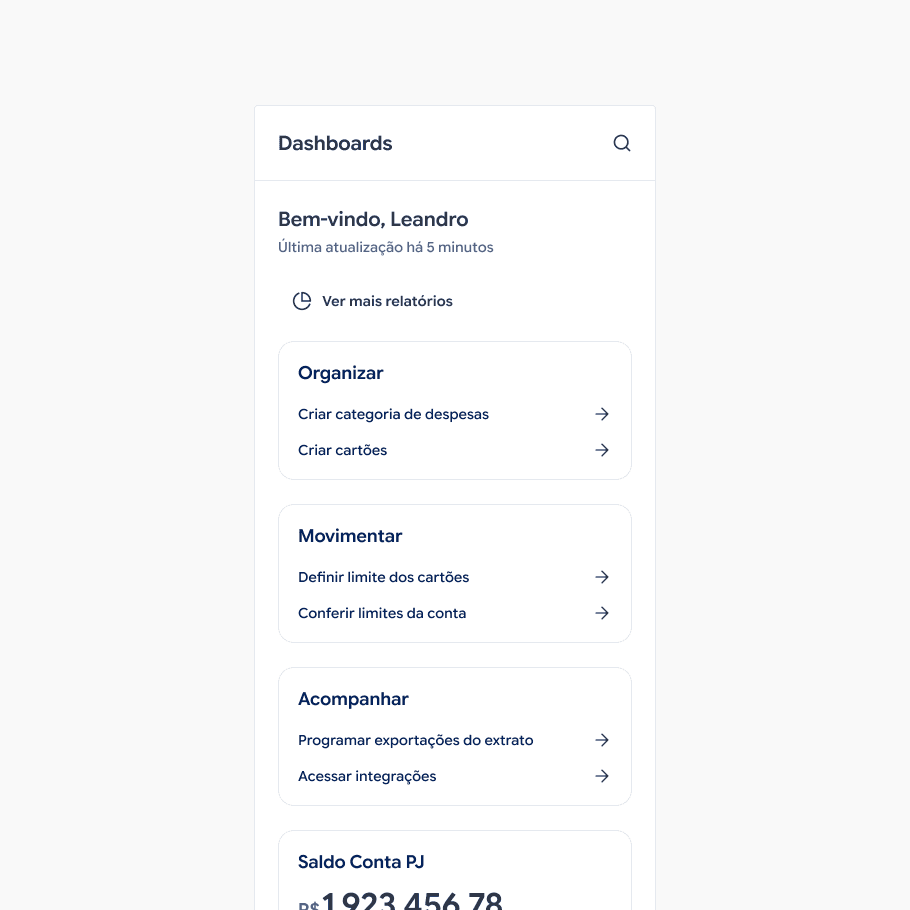
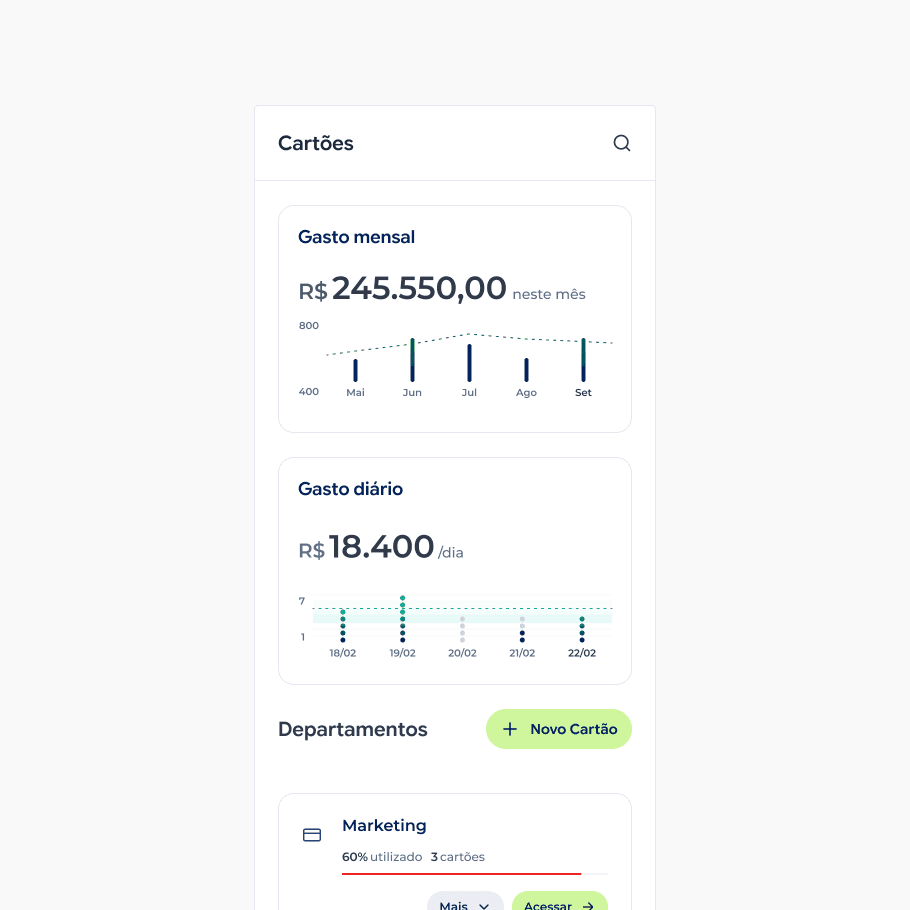
Impact
- 3,973 survey responses at a 56.7% response rate - 8 in-depth interviews (started with 5, ran to saturation) - Identified interchange (82%) as the core revenue engine and dropshippers + startups as the highest-value segments - Repositioned the product from commodity account → corporate card platform - Outcome: R$120M+ raised and selection into Y Combinator The bet paid off because finding PMF wasn't a product tweak — it reshaped acquisition channels, partnerships, and positioning around the segments the data revealed. Following the revenue instead of the category turned a me-too account into a defensible category of one.
Variations

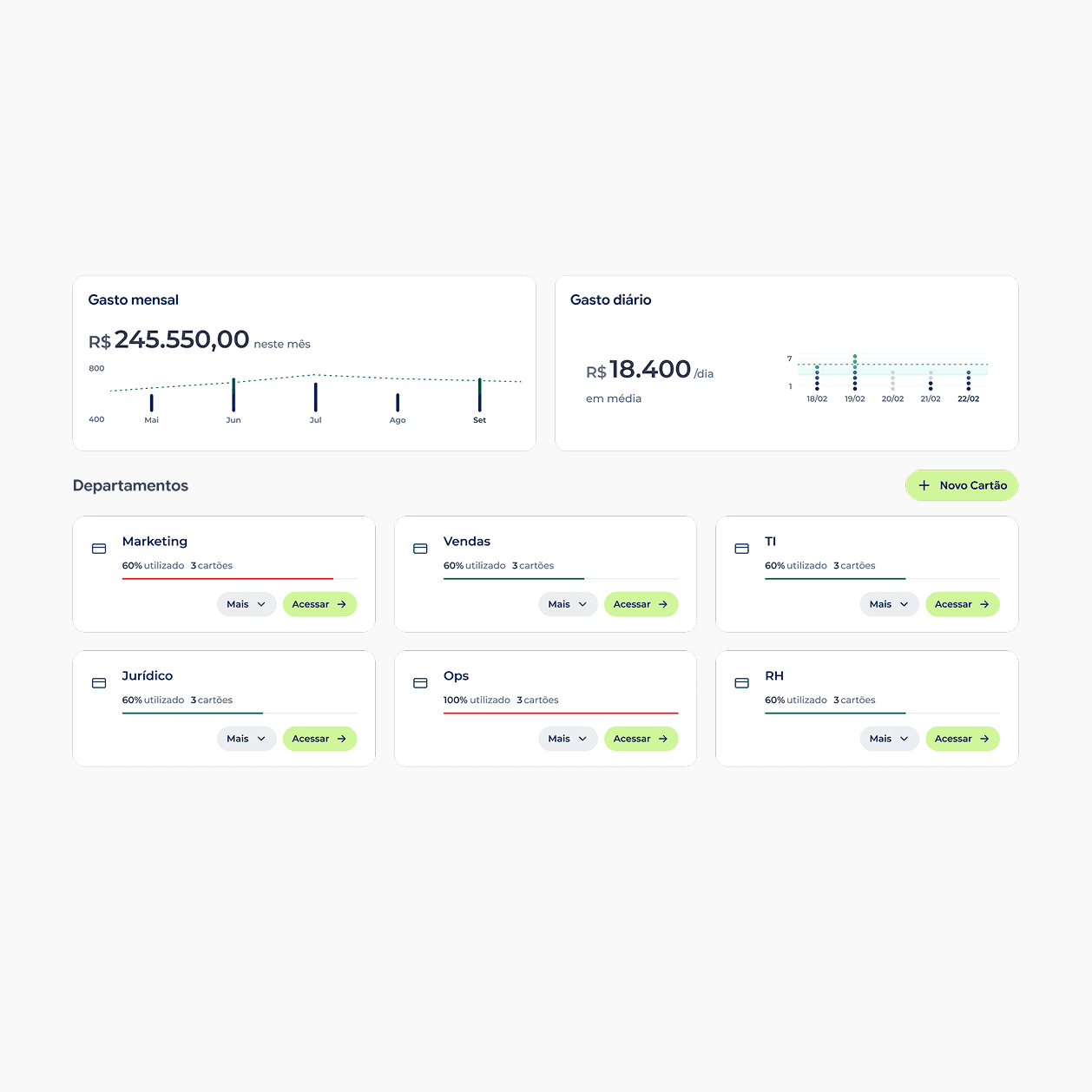


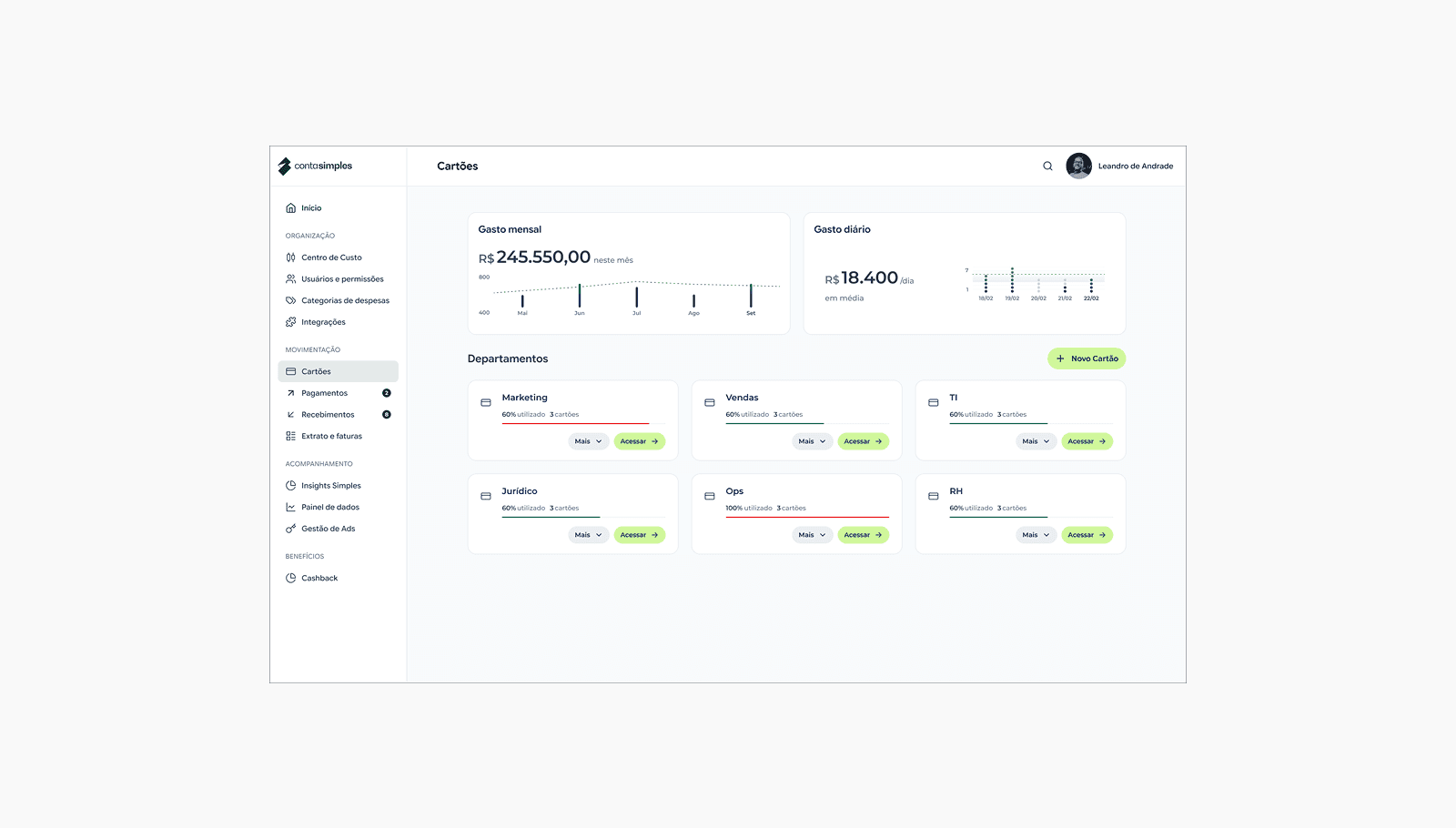

Want to go deeper?
The full case study covers the research process, key metrics, and the decisions behind the design.